
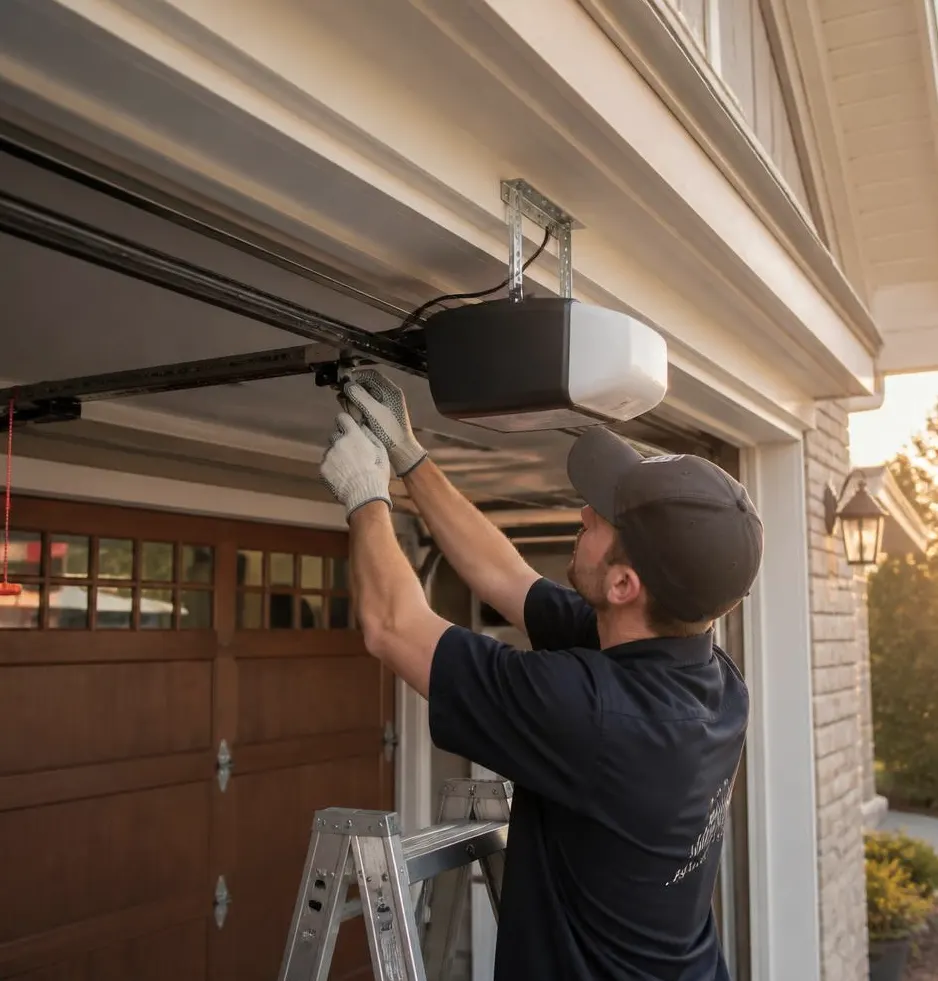
What That Racket Is Actually Costing You
A garage door opener that bangs, grinds, or rattles every time it runs isn't just annoying—it's usually telling you something is wearing out. Ignore it through another hot, humid season and small problems compound. Loose hardware vibrates looser. Dry-out lubricant lets metal grind on metal. A worn roller that's merely noisy today can crack and jump the track next month. What starts as a $15 bottle of lubricant and an hour with a socket wrench can turn into a cable repair, a bent track, or a full opener replacement if you wait until spring to deal with it. With cooler, drier weather settling in and houseguests likely coming through for the holidays, now's a good time to fix it instead of living with it.
Tools You'll Need
- Step ladder
- Socket wrench set and a screwdriver
- White lithium grease or a silicone-based garage door lubricant (not WD-40—it attracts dust and dries out fast)
- Clean rags
- Work gloves
- Flashlight
- Replacement nylon rollers (if needed)
Step-by-Step: Tracking Down and Fixing the Noise
- Tighten everything first. Vibration and humidity swelling work hardware loose over time. Go around every bolt on the track brackets, the opener's mounting bracket, and the motor unit itself with a socket wrench. This alone fixes a surprising number of rattles.
- Lubricate the moving parts. Apply lithium grease to the rollers, hinges, and the opener's drive chain or screw rail. Skip the springs for now—more on that below. Florida's humidity washes lubricant off faster than drier climates, so plan to repeat this every few months, not once a year.
- Inspect the rollers. Shine a flashlight on each roller as the door moves. Flat spots, cracks, or chipped edges mean it's time to swap them for new nylon rollers, which run quieter than steel and handle temperature swings better.
- Check chain or belt tension. A loose chain slaps against the rail with every cycle. Most openers have a tensioning bolt near the motor head—consult your manual and adjust until the slack is minimal but not bowstring-tight.
- Add vibration isolation. A rubber isolation kit between the opener and the ceiling mounting bracket absorbs a lot of the hum and rattle that travels into living spaces, especially useful if a bedroom sits near or above the garage.
- Listen for the source before you assume. Grinding usually points to the motor or gears. Rattling is often loose hardware. A metallic slapping sound means chain slack. A screech points to a dry or failing roller or bearing. Identifying the sound saves you from fixing the wrong thing.
What a Homeowner Can Safely Do
Tightening hardware, lubricating rollers and hinges, swapping out basic rollers, and adjusting chain tension are all reasonable weekend projects with the right tools.
What Needs a Technician
Torsion springs are under heavy tension and should never be adjusted or lubricated by hand—leave that to a trained technician. The same goes for frayed or snapped cables, a door that's come off its track, bent track sections, or a motor that's grinding from internal gear failure. If the noise keeps returning no matter how much you tighten and lubricate, something structural or electrical is likely the real cause.
When a Belt-Drive Swap Makes Sense
Chain-drive openers are inherently louder because metal links run over a sprocket. If your opener is getting older, if the garage sits under or next to a bedroom, or if you've maintained a chain-drive unit faithfully and it's still noisy, a belt-drive opener is usually the real fix. Belt drives run nearly silent and hold up well in humid, swing-temperature climates. The trade-off is that swapping drive types means remounting the rail, rewiring the motor head, and recalibrating the safety sensors—not a simple bolt-on job, and one worth having a technician handle correctly the first time.
When to Call Deltona Garage Door Repair
If you've gone through the DIY steps and the door still sounds rough, or if you suspect the noise is coming from a spring, cable, or bent track, it's time to call in a technician. We handle Garage Door Tune-Up & Maintenance visits that cover full lubrication, hardware inspection, and roller replacement in one trip, and we install belt-drive openers for homeowners ready to retire a noisy chain-drive unit for good. Either way, we check the whole system—not just the symptom you called about.
If your garage door opener has been grinding its way through another Florida summer, give Deltona Garage Door Repair a call. We serve Deltona, DeBary, Orange City, DeLand, Lake Helen, Enterprise, Sanford, and Lake Mary, and we're happy to come take a listen.